

There is a big difference between riding a bike around the neighborhood and riding a bike to school.
Your child may already be confident on two wheels. They can start, stop and turn without much thought. Then, sooner or later, comes the question: “Can I bike to school by myself?”
Age can be part of that decision, but it shouldn’t be the only factor. Riding to school also requires traffic awareness, familiarity with the route and enough judgment to deal with something unexpected. A short ride through quiet residential streets is very different from a journey with busy intersections and heavy school traffic.
Instead of asking only whether your child is old enough, it may be more useful to ask: Are they ready for this particular ride?
What Age Can a Child Bike to School Alone?
There is no universal age when every child becomes ready to bike to school independently. The American Academy of Pediatrics recommends considering traffic conditions, a child’s maturity, their ability to stay focused on traffic and how reliably they follow the rules of the road. Parents should also practice the route to school with their child beforehand.
That means two children of the same age may be ready at different times. One might comfortably manage a short, familiar journey along quiet streets, while another may still need an adult alongside them on a route with fast traffic or complicated intersections.
Readiness depends on both the child and the route.
5 Signs Your Child May Be Ready to Bike to School
Knowing how to ride a bike is only the beginning. On the way to school, children need to control the bike while watching traffic, remembering the route and making decisions without a parent immediately beside them.
Here are five things to look for during your practice rides.
1. They Can Control Their Bike Confidently
Your child should be able to start smoothly, brake predictably, turn without losing control and maintain a steady path. More importantly, those skills should hold up when their attention shifts away from simply operating the bike.
Watch what happens when they look behind them or check for traffic. Do they continue in a reasonably straight line, or does the bike drift with their gaze? Can they slow down approaching an intersection and stop where they intended to?
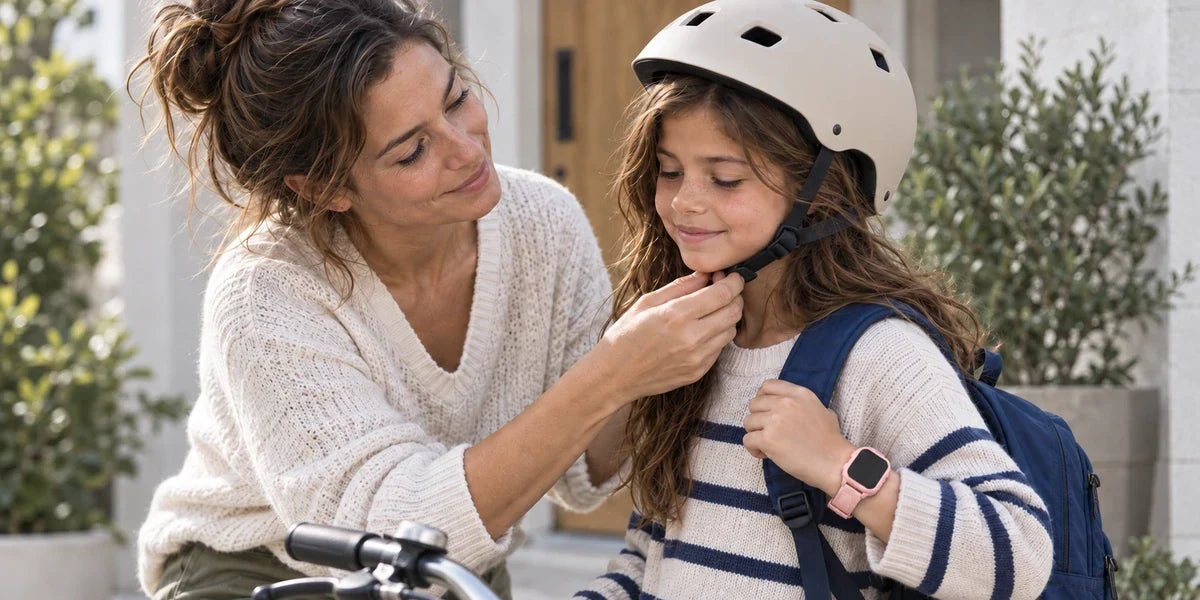
Basic bike handling should feel comfortable enough that your child can pay attention to what is happening around them. A properly fitted helmet should also be part of every ride.
2. They Understand Traffic, Not Just Cycling
A child can be an excellent rider in a park and still need more practice before riding to school without an adult.
Watch how they behave at intersections and driveways. They should know when to slow down or stop, look for approaching and turning vehicles, follow the traffic signs and signals that apply to the route, and understand that a driver may not always have seen them.
Try not to prompt them at every familiar crossing during a practice ride. If it is safe to do so, give them a moment to make the decision first. This can tell you more than asking whether they know the rule. What matters is whether the habit remains when you are no longer beside them reminding them to stop or look.
Local cycling rules can vary, so parents should also check the rules that apply where they live.
3. They Know the Route, Not Just Where School Is
Ride the school route together several times before considering an independent trip. At first, you can lead. Once it becomes familiar, switch roles and let your child show you the way.
See whether they remember where to turn, where they need to slow down and which parts of the journey require extra attention. Look particularly closely at:
- busy intersections;
- driveways with limited visibility;
- streets with faster traffic;
- school drop-off and pickup areas;
- places where bike lanes or paths end;
- construction or temporary road changes; and
- areas where parked vehicles make it harder to see traffic.
Knowing the route is more than remembering a sequence of turns. Your child should begin to recognize the difficult parts of the journey and understand why they need more attention.
4. They Know What to Do When Something Changes
Most trips to school will probably go exactly as planned. It is still worth finding out how your child thinks when they don’t.
During a practice ride or at home, try a few simple questions:
- What would you do if your bike had a problem halfway to school?
- What if the usual street was closed?
- What if you fell and needed help?
- What if the friend you normally ride with didn’t arrive?
- What if you realized you had taken a wrong turn?
You are not looking for a perfect answer to every possible situation. What you want to hear is that your child can stop, think and choose a sensible next step rather than rushing into another decision.
It can also help to identify a few trusted places or adults along the route they could turn to if they genuinely needed assistance.
5. They Can Follow an Agreed Family Plan
Before your child starts making the journey without you, agree on a simple plan together. It might cover which route they normally take, approximately when they leave, whether they are meeting a friend, when they should contact you and what to do if after-school plans change.
Keep it simple enough to remember. Then notice whether your child can follow the plan during practice without repeated reminders. More freedom works better when a child can also handle the small responsibilities that come with it.
The Route Matters as Much as the Rider
Even a capable young cyclist can face a route that is not suitable for independent travel yet.
Ride the entire journey yourself at roughly the same time your child would normally travel. If school starts at 8:30 a.m., a Saturday afternoon ride will not necessarily show you what the route looks like during the weekday school run.
Watch for turning vehicles, cars backing out of driveways, traffic speed, difficult crossings and places where visibility is limited. The area immediately around the school deserves particular attention because drop-off and pickup traffic can make an otherwise straightforward route much more complicated.
If one section concerns you, look for alternatives. A slightly longer route along quieter streets may be a better choice, or you may decide to accompany your child through the difficult section while letting them handle the rest.
Deciding to wait does not necessarily mean your child lacks the skills. Sometimes, the route isn’t ready for the child yet.
Build Independence One Ride at a Time
The first trip without a parent does not have to begin with your child riding the whole way alone.
Start by riding the complete route together. Once it becomes familiar, let your child take the lead while you follow. Avoid giving directions unless you need to step in for safety, and watch how they handle turns, crossings and changes in traffic. Over time, you may find that you can stay farther behind or accompany them only through the more complicated part of the journey.
For some families, the next step is riding with an older sibling, a trusted friend or a small group of children. Some communities also organize bike buses, where children travel together along a planned route with adults and join the group at designated meeting points.
There is no need to jump directly from riding beside your child to sending them out alone. Giving them more of the journey to manage themselves can make the transition much more gradual.
Bike-to-School Readiness Checklist
Before trying a ride without an adult beside them, consider whether your child can:
- control the bike confidently while still paying attention to their surroundings;
- follow traffic rules consistently without frequent reminders;
- complete the route without relying on you for directions;
- recognize difficult parts of the journey and respond appropriately;
- handle a change of plan, such as a blocked route or bike problem;
- know when and how to ask for help;
- follow your family’s agreed route and communication plan; and
- wear a properly fitted helmet every time.
This does not need to be a test that your child passes in one afternoon. Use the checklist to identify what still needs practice. If everything feels comfortable except one difficult intersection, spend more time there or consider another route.
Staying Connected Without Taking Away the Independence
Before the first ride without you, decide together when your child should get in touch. They may not need to check in during a normal journey, but they should know what to do if the bike develops a problem, the route changes, after-school plans are different or they need help.
Some families use a kids smartwatch for this purpose, particularly when they want calling and location features without giving their child a smartphone.
LAGENIO kids smartwatches offer features such as 4G Voice Call, GPS location features, SOS and parent-approved contacts, while avoiding social media, an open browser and third-party apps. This can give children a straightforward way to reach their family when they need to.
Technology is still only a backup to preparation. A watch cannot judge an intersection for your child, teach good bike control or make an unsuitable route suitable. Those decisions still depend on practice, judgment and the conditions of the journey.
Frequently Asked Questions
What age can a child bike to school alone?
There is no single age that applies to every child. Consider your child’s bike control, maturity, traffic awareness, ability to follow road rules and familiarity with the route. The traffic conditions and complexity of the journey matter just as much as age.
How do I know if my child is ready to bike to school?
Look beyond whether they can simply ride a bike. They should be able to control the bike while watching their surroundings, make sensible decisions around traffic, know the route, respond when plans change and follow an agreed family plan without constant reminders.
Should children bike to school alone or with someone else?
It depends on the child and the route. Riding with a parent, older sibling, trusted friend or organized bike bus can provide useful intermediate steps before a child makes the journey alone.
How should parents prepare a bike route to school?
Ride the route together several times, including during the normal school commute when possible. Identify difficult intersections, faster roads, busy driveways, school traffic and places with limited visibility. Once the route becomes familiar, let your child take the lead so you can observe how they make decisions.
Let Them Grow Into the Journey
The first independent ride to school may not feel like a major milestone when it finally happens. It might follow weeks of riding together, then letting your child lead, then watching them handle more of the route without your help.
Those practice rides give you something an age recommendation cannot: a chance to see how your child actually rides, thinks and responds on the route they will use.
Over time, you will get a clearer sense of what they can handle without you beside them. The first ride on their own does not need to happen at a particular age or during a particular school year. It can happen when both the rider and the route are ready.
Share:
How Accurate Are Kids GPS Watches? GPS, Wi-Fi and LBS Explained