
Should I get my 7-10 year old a smart watch? For many parents, this question comes up right around the time kids start wanting more freedom. They may walk to school, ride bikes with friends, join sports, go to after-school clubs, or spend more time away from home.
At the same time, giving a 7-, 8-, 9-, or 10-year-old a phone can feel like opening a door you’re not ready to open yet. Social media, games, random apps, group chats, and the wider internet can be a bit much for younger kids.
That’s why many families look at a kids smartwatch instead. It offers a middle ground. Your child can call, message approved contacts, and use GPS safety features, but they don’t need a full smartphone in their pocket.
A good kids smartwatch is not about spoiling your child with another screen. Used well, it can help build trust, safety, and independence, one small step at a time.
Catalog
- Why Parents Choose a Smart Watch Before a Phone?
- The 7-10 Age Range Is a Big Transition
- Safety Is the Main Reason Most Parents Buy One
- A Smartwatch Can Help Kids Build Responsibility
- When a Smartwatch Makes the Most Sense?
- School Use: Keep It Simple
- How a Smartwatch Supports Independence?
- Picking the Right Device for Your Family
- Should I Get My 7-10 Year Old a Smart Watch? Final Buying Checklist
- FAQs
- Conclusion
1. Why Parents Choose a Smart Watch Before a Phone?
A smartphone gives kids access to a lot. Sometimes, too much. A smartwatch keeps things simpler.
For parents of 7- to 10-year-olds, the main goal is usually connection. You want to know your child got to school. You want them to call if practice ends early. You want a way to reach them without handing over YouTube, TikTok, games, and app stores.
That’s where a kids smart watch without phone setup makes sense. It gives children the basic tools they need without the extra distractions.
Many parents like kids smartwatches because they offer:
- Quick parent-child calling
- GPS location tracking
- SOS emergency support
- Parent-approved contacts
- Class mode
- Simple messages
- Less screen time than a phone
- A device that stays on the wrist
For kids, it feels grown-up. For parents, it feels safer. Not a bad deal.
2. The 7-10 Age Range Is a Big Transition
Ages 7 to 10 are full of change. Kids are becoming more confident, but they still need clear rules. They may want to do more on their own, yet they still look to parents for comfort and help.
At this stage, children often start doing things like:
- Walking short distances without a parent
- Riding the school bus
- Joining clubs or lessons
- Playing outside with friends
- Attending birthday parties
- Going between school, home, and caregivers
- Spending time at sports fields or activity centers
A smartwatch can support this new independence. It gives your child a simple way to contact you, and it gives you peace of mind when plans change.
The key is readiness. Some kids at 7 can handle a smartwatch well. Some kids at 10 may still lose it by Tuesday. You know your child best.

3. Safety Is the Main Reason Most Parents Buy One
For most families, safety comes first. A kids gps tracker smart watch can help parents stay aware without calling all day.
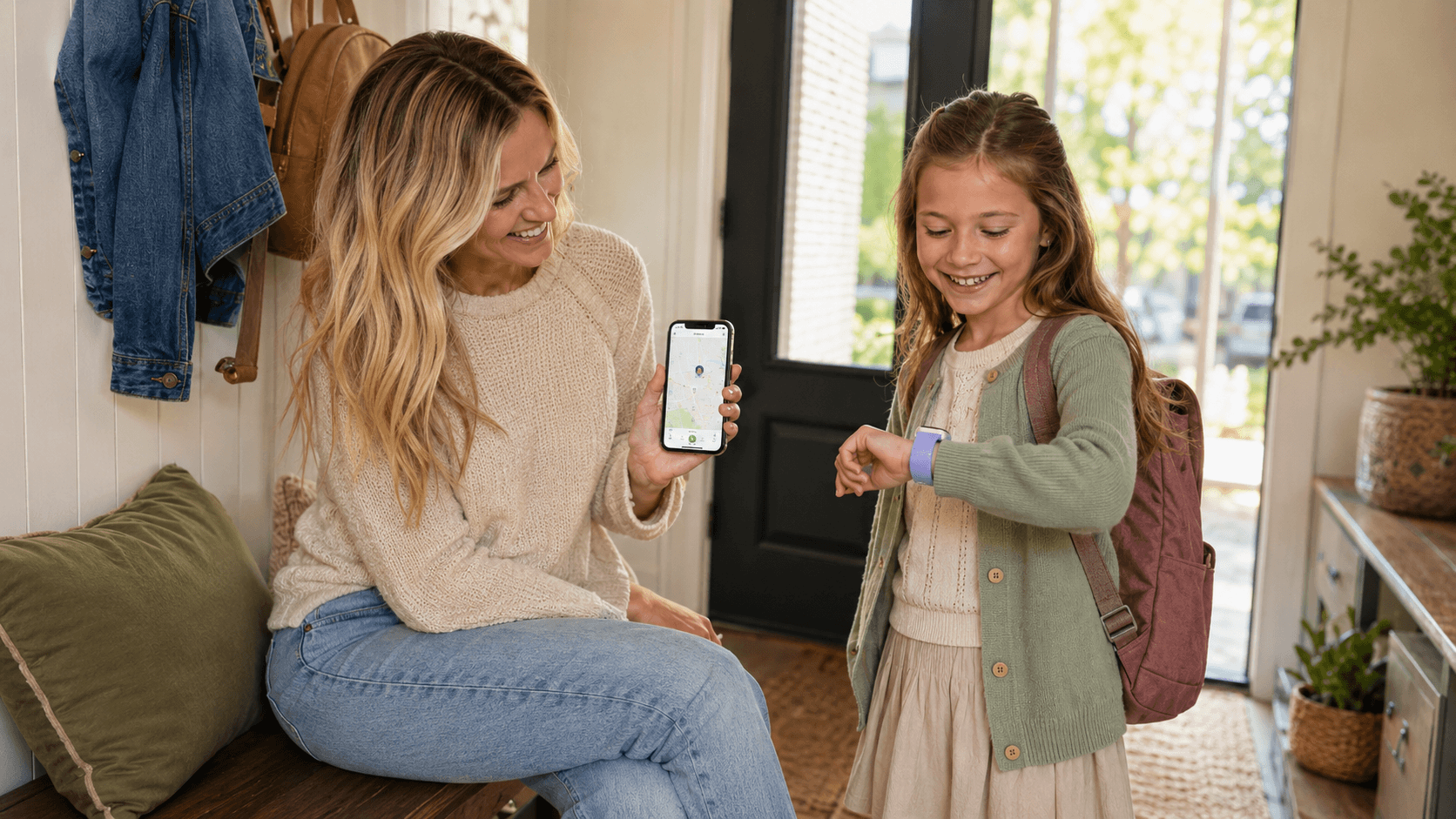
GPS tracking is useful when your child is outside your direct view. You can check their location through a parent app and confirm they arrived where they should be. It’s not about hovering. It’s about having a backup when life gets messy.
Useful safety features often include:
(1) GPS Location Tracking
Parents can view the child’s location from an app. This is helpful for school runs, outdoor play, sports practice, and weekend activities.
(2) Safe Zones
You can set areas such as home, school, or a grandparent’s house. When your child enters or leaves that area, the app can send an alert.
(3) SOS Button
An SOS button lets your child contact a parent or trusted adult fast. In a stressful moment, simple is best.
(4) Approved Contacts
A kids smartwatch should let parents control who can call or message the device. This keeps communication safer and more focused.
(5) Class Mode
Class mode helps reduce distractions during class. It can limit games, calls, or alerts while your child is learning.
These features do not replace adult care. They simply add another layer of support. And honestly, for busy families, that extra layer can be a big relief.
4. A Smartwatch Can Help Kids Build Responsibility
A smartwatch is also a small lesson in responsibility. Your child learns to care for a device, keep it charged, follow rules, and use it at the right time.
That may sound simple, but it matters.
Before giving your child the watch, explain the basics:
- Wear it when leaving home.
- Answer parent calls when possible.
- Don’t use it during class.
- Don’t let friends play with it.
- Use SOS only for real problems.
- Charge it every night.
- Tell an adult if it gets lost or damaged.
Keep the rules short and clear. Long lectures don’t stick. A few simple rules work better.
You can also make it feel positive. Instead of saying, “We’re giving you this so we can track you,” try saying, “This helps us stay connected while you get more freedom.”
That small shift makes a difference.

5. When a Smartwatch Makes the Most Sense?
A kids smartwatch is most useful when it solves a real problem in your daily routine.
It may be a good fit if your child:
- Walks to school or the bus stop
- Goes to after-school programs
- Plays sports
- Visits friends or relatives
- Gets nervous when away from parents
- Needs reminders during the day
- Has different pickup plans during the week
- Wants a phone, but you feel it’s too early
- Is starting to do small things independently
It can also help families with shared custody, busy schedules, or multiple caregivers. When different adults help with pickup, drop-off, and activities, a smartwatch keeps communication easier.

6. School Use: Keep It Simple
School rules vary. Some schools allow smartwatches. Some only allow them in Class mode. Others do not allow connected devices during the day.
Before your child wears the watch to school, check the rules.
If it is allowed, explain that the watch is not for playing, showing off, or messaging friends during class. It is for safety and important communication.
Class mode can help here. It lets the watch stay quiet during learning time, which teachers will appreciate.
7. How a Smartwatch Supports Independence?
Childhood independence grows in small steps. A smartwatch can support those steps without pushing kids too far too fast.
Your child may feel more confident walking to a nearby neighbor’s house. They may feel calmer at a new activity. They may like knowing they can call you if plans change.
Parents also feel better. You don’t have to wonder where your child is or wait in panic when a bus is late. You have a simple way to check in.
That peace of mind is one of the biggest reasons parents choose smartwatches.
8. Picking the Right Device for Your Family
The best smartwatch is not always the one with the most features. For kids ages 7 to 10, simple often wins.
Look for a watch that fits your real needs:
- Safety
- Communication
- GPS tracking
- Easy setup
- Parent controls
- Comfort
- School-friendly use
- Long enough battery life
A brand like Lagenio focuses on helping families stay connected while giving kids a safer way to explore independence. For parents who want a smart device without jumping straight to a phone, that kind of balance matters.

9. Should I Get My 7-10 Year Old a Smart Watch? Final Buying Checklist
Before buying, use this simple checklist:
- My child spends time away from me during the week.
- I want a way to call or message my child.
- I am not ready to give my child a smartphone.
- GPS tracking would help our family routine.
- My child can follow basic device rules.
- The school allows smartwatches or class mode.
- I am willing to set clear limits.
- The watch offers parent-approved contacts.
- The battery life fits our daily schedule.
- The device feels useful, not just trendy.
If most of these points fit your family, a smartwatch may be a smart choice.
10. FAQs
(1) Is a kids smartwatch good for a 7-year-old?
Yes, it can be, as long as the child is ready for simple rules. A basic smartwatch with calling, GPS, and parent controls can work well for younger kids.
(2) Can a kids smartwatch replace a phone?
For many families, yes. A smartwatch can handle calls, simple messages, GPS tracking, and SOS alerts without giving kids full smartphone access.
(3) Does a kids smartwatch need a SIM card?
Many smartwatches with calling and GPS need a SIM card or service plan. Some models include a plan option, while others allow compatible SIM cards.
(4) Is GPS tracking too much for kids?
GPS tracking is helpful when used with care. It should support safety and independence, not constant checking or pressure.
(5) Can kids wear smartwatches at school?
It depends on school rules. Many parents use class mode to reduce distractions during class.
(6) What is the best phone alternative for kids?
A kids smart watch without phone features like social apps and open internet access is often a good first step. It gives kids communication tools without the pressure of a full smartphone.
(7) Why a Smart Watch May Be Better Than a Smartphone?
A smartwatch gives families many of the helpful parts of a phone without the stressful parts. Your child can call you, send simple messages, and use safety tools. But they won’t have full access to social apps, online searches, or endless videos.
11. Conclusion
Should I get my 7-10 year old a smart watch? In many cases, yes, especially if your child is starting to gain more independence and you are not ready for a phone.
A kids smartwatch can help with safety, location tracking, calls, messages, and daily routines. It gives parents peace of mind and gives children a small taste of responsibility.
The best choice depends on your child, your schedule, and your comfort level. Choose a watch that keeps things simple. Set clear rules from day one. Use GPS with trust, not fear. Keep communication open.
At the end of the day, a smartwatch should help your family feel more connected, not more stressed. When it does that, it’s more than a gadget. It’s a practical tool for a growing child.

Share:
SOS on a Kids Smart Watch: How Emergency Calling Really Works
Smart Watch vs Phone for Kids: A Parent’s Guide to Safer, Simpler Connection