
Choosing the first device for a child is not always easy. Some parents want a simple way to stay in touch after school. Some kids want more freedom as they grow. At the same time, many families worry about screen time, online safety, privacy, and whether a full phone is too much too soon.
That is why the smart watch vs phone for kids question has become so common. It is not only about buying a device. It is about finding the right level of connection for your child’s age, habits, and daily routine.
A kids smart watch usually keeps things simple. It can help children call, message, and share their location without giving them full access to apps, social media, and the open internet. A phone offers more features, but it can also bring more distractions and more rules for parents to manage.
So, which option is better for your child right now? Let’s compare both in a clear, practical way.
1. Why Parents Are Rethinking Phones for Kids
A smartphone is powerful. Too powerful, sometimes.
For adults, a phone is normal. For kids, it can become a tiny entertainment machine that follows them everywhere. Games, videos, group chats, random links, ads, and social media can all arrive before a child is ready to handle them.
Many parents do not hate phones. They just do not want to hand over the whole internet too early. That’s the real issue.
A child may need to:
- Call a parent after school
- Share their location
- Send a quick message
- Ask for help in an emergency
- Stay reachable during sports, camp, or travel
They may not need:
- Social media
- App downloads
- Public comments
- Long video watching
- Internet browsing
- Random contacts
- Too much screen time
That’s where kids smart watches step in. They offer the useful parts of a phone, trimmed down to fit a child’s real needs.
2. Smart Watch vs Phone for Kids: What’s the Big Difference?
The biggest difference is control.
A phone gives kids broad access. A kids smart watch gives them limited access. That smaller design is not a weakness. For many families, it is the whole point.
A children’s smart watch is built around simple connection. It usually focuses on calling, messaging, GPS location, safe contacts, alarms, and daily use. It sits on the wrist, so it is harder to lose than a phone tossed into a backpack.
A phone is better for older kids who need apps for school, homework, photos, email, and more independent communication. But for younger children, it can be too much, too soon.
Think of it like this: a phone is a full toolbox. A kids smart watch is the few tools your child actually needs right now.
3. When a Kids Smart Watch Makes More Sense
A kids smart watch may be the better choice if your child is still in primary school, walks to school, goes to after-school clubs, or spends time away from you but does not need a full smartphone.
It works well for kids who need simple contact but still need boundaries.
A kids smart watch can help when:
- Your child is not ready for social media
- You want GPS location support
- You want limited contact lists
- You want fewer app distractions
- Your child often loses things
- You want quick calls without a phone
- You need a simple first device
And yes, for active children, a watch is often easier than a phone. Running around the playground, a phone can fall out of a pocket. A watch stays on the wrist. That alone can save a lot of “Where did you put it?” drama.
4. When a Phone May Be Better
A phone may be better for older children or teens who need more features. If your child has school apps, homework tools, team chats, email, or more complex communication needs, a phone may be more useful.
A phone also makes sense when your child can follow screen-time rules, avoid unsafe links, understand privacy, and manage digital pressure.
In other words, the question is not only about age. It is about maturity.
Some 10-year-olds are careful and responsible. Some 13-year-olds still need tight limits. Parents know their own kids best.

5. Safety First: Are Smart Watches Safe for Kids Radiation?
Many parents search for this exact question: Are smart watches safe for kids radiation? It is a fair concern.
Kids smart watches and phones use radiofrequency energy when they connect to cellular networks, Wi-Fi, or Bluetooth. This is a type of non-ionizing radiation. It is not the same as X-rays. The U.S. FDA states that current scientific evidence does not show a danger to users of cell phones from radiofrequency exposure, including children and teenagers.
The FCC also sets limits for wireless device exposure. In the U.S., the FCC limit for public exposure from cellular phones is a Specific Absorption Rate, or SAR, of 1.6 watts per kilogram.
Still, many parents prefer a cautious approach. That is reasonable. The American Academy of Pediatrics has supported more research into long-term exposure and suggests practical ways to reduce exposure, such as limiting unnecessary use and using speaker mode when possible.
So, what can parents do?
- Keep calls short when possible
- Use messages for simple updates
- Choose trusted devices
- Avoid unnecessary all-day calling
- Follow the product safety guide
- Turn off features your child does not need
A kids smart watch is often used for short, practical contact. That can be a big difference from a phone that is used for long calls, browsing, gaming, and video watching.
6. Screen Time: The Quiet Deal-Breaker
Screen time is one of the biggest reasons parents choose a smart watch over a phone.
A phone invites attention. A smart watch interrupts less. The screen is smaller. The features are simpler. The child can check a message or answer a call, then get back to real life.
That matters.
Kids need time to move, play, talk, think, and, let’s be honest, get bored once in a while. Boredom is not always bad. It can lead to imagination, building, drawing, and weird little games that make childhood feel like childhood.
A phone can pull kids into long sessions. A smart watch is usually more “quick check” than “sit and scroll.”
That is a win for many parents.

7. GPS Location: Peace of Mind Without Hovering
One of the strongest reasons to choose a kids smart watch is location support.
Parents do not want to spy on their kids. Not really. They want to know their child got to school, arrived at practice, or made it to a friend’s house safely.
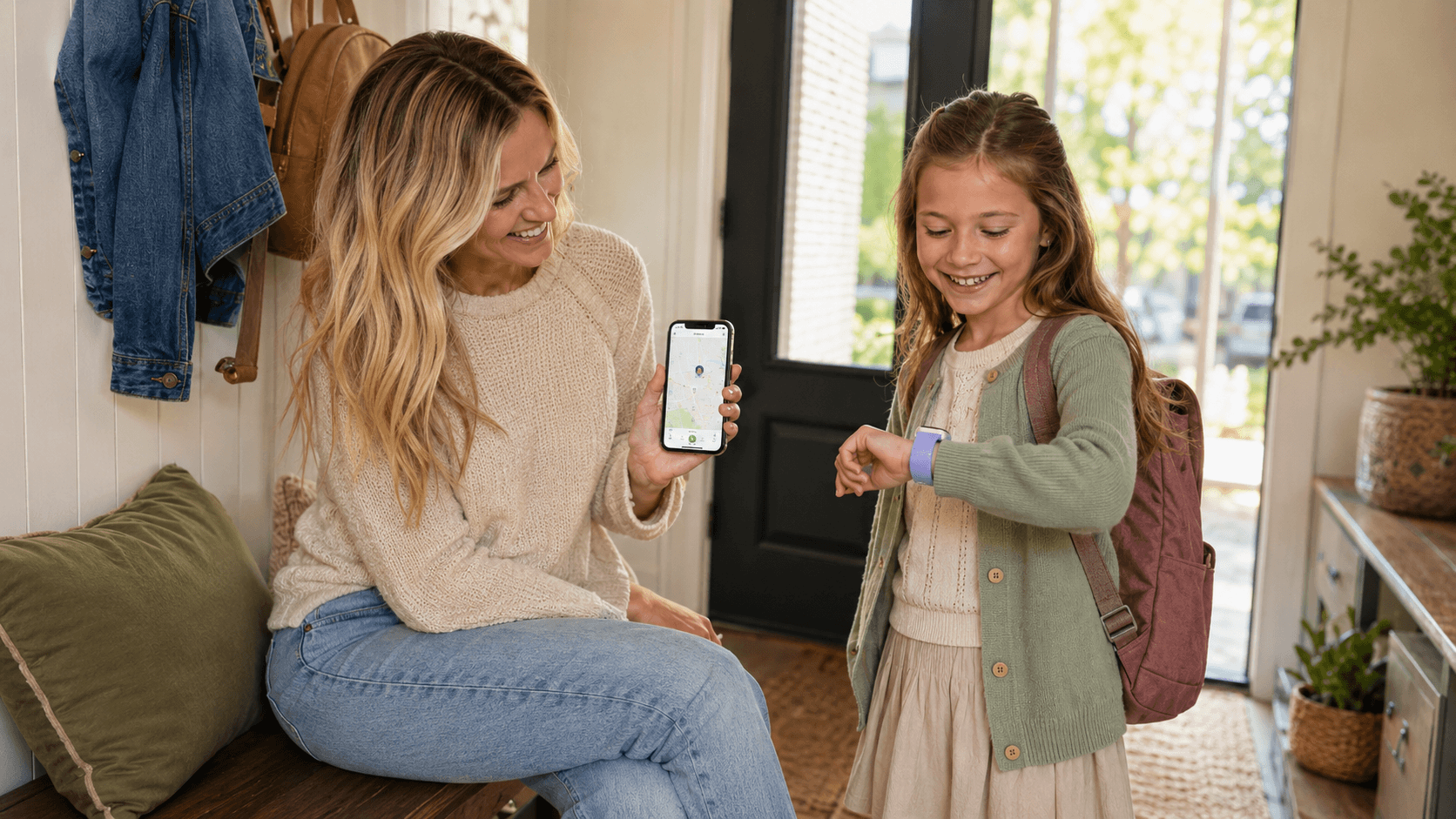
A GPS-enabled kids watch can help with that. It gives parents a simple way to check location when needed. For younger children, this can reduce worry without giving them a full phone.
Useful moments include:
- Walking to school
- Riding the bus
- Going to the park
- Visiting relatives
- Joining sports practice
- Traveling with family
- Attending summer camp
A smart watch can also be helpful when a child is too young to manage a phone but old enough to spend short periods away from parents.
8. Calling and Messaging: Simple Is Better
A children’s smart watch usually keeps communication simple. That is a good thing.
Instead of open texting with anyone, many kids smart watches allow parents to manage contacts. That means your child can speak with trusted people, such as parents, grandparents, siblings, or caregivers.
This makes the device feel less like a public phone and more like a family connection tool.
For parents looking for a childrens talking watch, this is one of the most useful features. A talking watch is not just about telling time. It can help a child call home, hear a parent’s voice, and feel safe when plans change.
For example, a child can call and say:
- “Practice ended early.”
- “I missed the bus.”
- “I’m at the front gate.”
- “Can you pick me up?”
- Tiny messages. Big relief.

9. Waterproof and Water-Resistant Designs: What Parents Should Know
Kids are not gentle with devices. They splash, spill, run, trip, sweat, and somehow turn a normal school day into a product durability test.
That is why many parents search for a Kids waterproof Smart Watch or a boys waterproof watch. Water resistance can be a real plus, especially for active children.
But here’s the catch: “waterproof” can mean different things depending on the rating. Some watches can handle handwashing or light splashes. Others may handle rain. Some are not meant for swimming, bathing, hot water, or soap.
Before buying, always check:
- Water-resistance rating
- Whether swimming is allowed
- Charging port protection
- Warranty rules
- Cleaning instructions
- Whether salt water or soap is allowed
A waterproof-style kids watch is useful for daily life, but it should still be treated with care. Kids may be kids, but electronics still have limits.
10. Cost: Phone Plans vs Kids Watch Plans
A phone can get expensive fast. There is the device, the monthly plan, the case, the screen protector, repairs, apps, and maybe a replacement when it gets lost.
A kids smart watch is often more focused and may cost less to manage. Many parents like that because they are not ready to pay for a full phone plan.
Some kids smart watches use a SIM card or a connection plan. Before buying, check:
- Monthly plan cost
- SIM card support
- Network compatibility
- Data needs
- Calling and messaging rules
- Whether your country or carrier is supported
For parents asking “where can I buy childrens watches,” the best answer is to buy from a trusted brand or official store. That way, you can check support, warranty, setup steps, SIM guidance, and product details before you spend money.

11. School Rules: A Watch Often Fits Better
Many schools have strict phone rules. Some ban phones during class. Others allow them but require them to stay in bags.
A kids smart watch may be easier to manage, depending on the school’s policy. Some watches include school mode or quiet time settings. This can limit distractions during class while still allowing parents to feel connected outside school hours.
Before sending any device to school, ask:
- Are smart watches allowed?
- Can the watch stay on during class?
- Is calling blocked during school hours?
- Can parents set quiet times?
- What happens if the device distracts other students?
No parent wants a call from the teacher because the watch became the star of math class. Better to set rules early.
12. Privacy and Control: The Parent Side of the Story
Privacy matters. A lot.
With a phone, kids may receive messages, links, friend requests, and app content that parents never see. With a kids smart watch, the contact circle is often smaller and easier to manage.
That can help parents teach safe communication step by step.
A smart watch can support healthy habits like:
- Answering calls politely
- Sharing location only with family
- Not giving device access to strangers
- Keeping personal details private
- Using tech for safety, not constant entertainment
This is not about controlling every second of a child’s life. It is about giving freedom in small, safe steps.
13. The Emotional Side: Kids Want Independence Too
Let’s not forget the child’s point of view.
Kids do not always want a device because they need one. Sometimes they want to feel grown up. They see older siblings with phones. They see classmates with screens. They want in.
A kids smart watch can give them a taste of independence without handing them the whole digital world.
They can wear their own device. They can call Mom or Dad. They can learn time management. They can feel trusted.
And for parents? It feels like a softer first step.
Not too babyish. Not too grown-up. Right in the middle.
14. Smart Watch vs Phone for Kids: Which Ages Fit Best?
There is no perfect age for every family. Still, here is a simple way to think about it.
Ages 5–7
A kids smart watch may be useful if the child spends time away from parents, rides a bus, or needs emergency contact. Keep features simple.
Ages 8–10
This is often a strong age range for a kids smart watch. Children want more independence but may not be ready for a smartphone.
Ages 11–12
Some children may still do well with a smart watch. Others may begin needing a phone for school or activities. Parent rules matter here.
Ages 13+
A phone may make more sense if the child is ready for wider responsibility. But limits, screen-time rules, and privacy talks are still important.
Again, age is only part of the story. Maturity, lifestyle, school rules, and family values matter just as much.
15. What to Look for Before Buying a Kids Smart Watch
Before choosing a device, look past the shiny photos. The best kids smart watch should fit your child’s real life.
Here are the features worth checking:
- Easy calling
- Parent-managed contacts
- GPS or location support
- Water-resistant design
- Comfortable strap
- Clear screen
- Good battery life
- Simple setup
- Reliable network support
- School mode or quiet time
- Strong customer support
- Clear warranty information
Also check whether the watch is too bulky for your child’s wrist. A watch can have great features, but if it feels heavy or itchy, your child will not want to wear it. Game over.
16. Common Mistakes Parents Make
Buying the first device you see can lead to headaches. Slow down a bit. A few checks can save time and money.
Avoid these common mistakes:
- Buying without checking network compatibility
- Assuming every watch is fully waterproof
- Choosing too many features for a young child
- Ignoring school rules
- Forgetting battery life
- Not checking return and support policies
- Letting the child set all the rules
A kids smart watch works best when parents set clear rules from day one.
For example:
- Charge it every night
- Do not call during class
- Answer parent calls
- Keep it on during outdoor activities
- Do not share it with strangers
- Tell a parent if something feels wrong
Simple rules. Less fuss.
17. FAQs
(1) Is a smart watch better than a phone for kids?
For many younger kids, yes. A smart watch gives them calling, messaging, and location support without the open access of a smartphone. It is often a better first device.
(2) Are smart watches safe for kids radiation?
Current evidence from the FDA does not show a danger to children or teens from radiofrequency exposure from cell phones, but many parents still choose to limit unnecessary use. A kids smart watch is often used for shorter, simpler communication.
(3) Can a kids smart watch replace a phone?
For younger children, it often can. A smart watch can handle basic calls, messages, and safety needs. For older kids who need school apps or more advanced tools, a phone may be better.
(4) Should I buy a waterproof kids smart watch?
If your child is active, a water-resistant or waterproof-style watch is helpful. Just check the rating first. Not every watch is safe for swimming, bathing, or hot water.
(5) What is the best first device for a child?
For many families, a kids smart watch is the best first step. It gives children independence while keeping parent control simple.
(6) Where can I buy childrens watches?
You can buy children’s smart watches from official brand websites, trusted online stores, or selected retailers. Buying from the official store is often better for support, warranty, and setup help.
(7) Is a boys waterproof watch different from a girls watch?
Usually, the main differences are color, strap size, and style. The important features are the same: comfort, durability, calling, location support, and water resistance.
18. Conclusion
The smart watch vs phone for kids debate is really about timing. A phone may be right one day, but that day does not have to be today.
For younger children, a kids smart watch gives families a safer, simpler way to stay connected. It supports calls, messages, location checks, and daily routines without giving kids full access to apps, social media, and endless screen time.
A phone gives more freedom. A smart watch gives guided freedom.
And for many parents, that is exactly the point.
Lagenio kids smart watches are made for this middle ground: enough connection to help kids feel independent, enough control to help parents feel calm, and enough simplicity to make daily life a little easier. As first tech goes, it’s a pretty smart move.


Share:
Should I Get My 7-10 Year Old a Smart Watch? A Practical Parent Guide
What Moms Really Want on Mother’s Day: Less Worry, More Connection