
Most parents do not start shopping for a wearable because they love tech specs.
They usually start with a small, practical question.
“Can my child walk home safely?”
“Do they really need a phone already?”
“Would a simple step counter be enough?”
“What if plans change after school?”
That is where the choice between a Kids Fitness Tracker vs Kids Smart Watch becomes more important than it first appears.
At a quick glance, the two products can look similar. Both sit on a child’s wrist. Both may have a screen. Both may count steps. Some even look almost the same in product photos.
But they are made for different jobs.
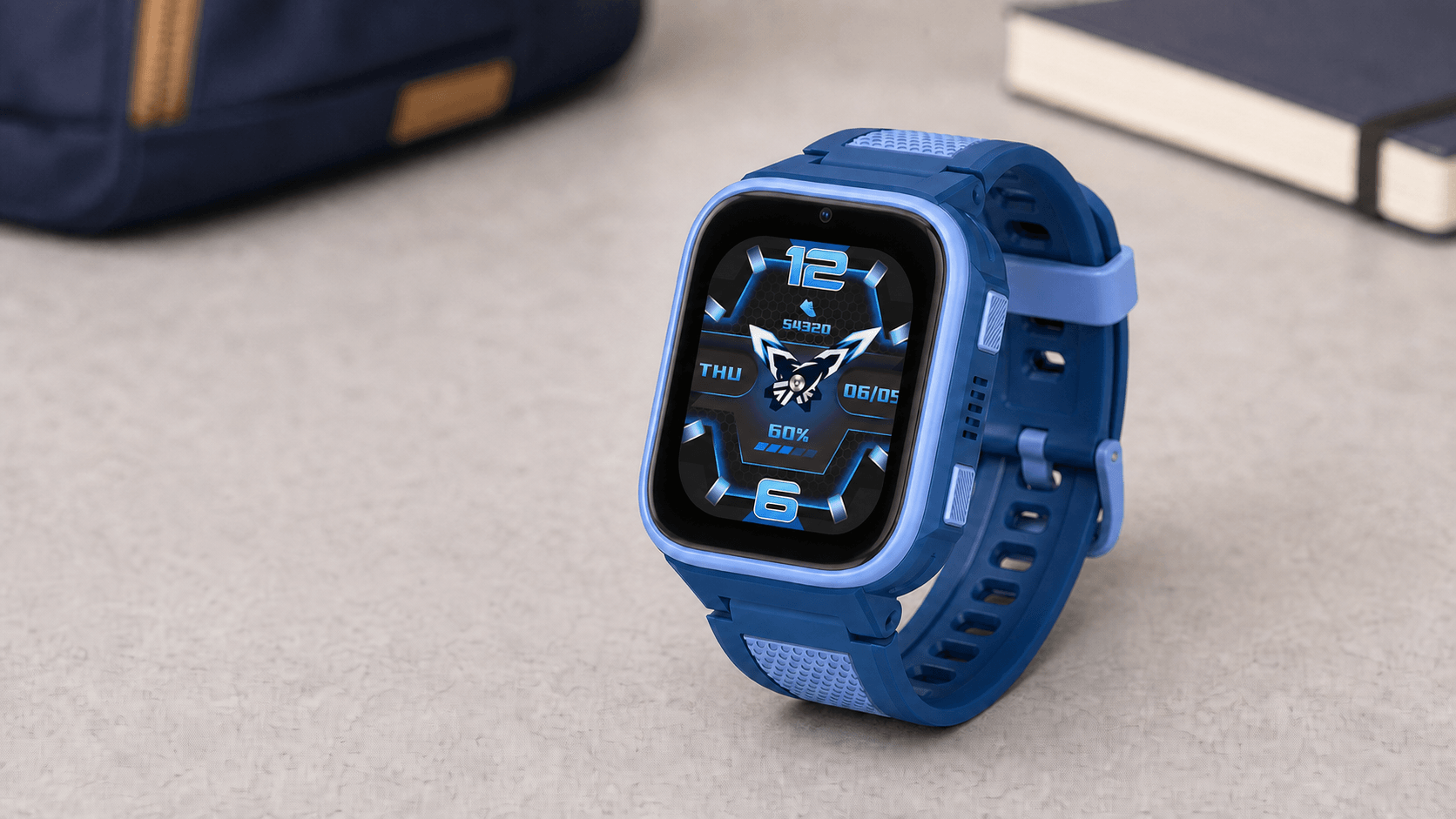
A kids fitness tracker is mainly about movement. It helps children track steps, activity, and sometimes sleep. A kids smart watch, especially a 4G kids smart watch, is more about communication, location, and safety. It can help parents call their child, check location, manage contacts, and use features like SOS or school mode.
So the real question is not “Which one is better?”
The better question is:
What do you actually need the device to do for your child?
What a Kids Fitness Tracker Is Good At
A Kids Fitness Tracker is a simple wearable made to help children move more and build healthier routines.
For many families, that is enough. Not every child needs GPS, calling, or a 4G connection. Sometimes parents just want a fun way to encourage daily activity.
A typical kids activity tracker may include:
-
Step counting
-
Daily activity goals
-
Sleep tracking
-
Move reminders
-
Stopwatch or timer
-
Basic clock display
-
Simple rewards or badges
-
Lightweight design
This type of device works well for children who enjoy goals. Some kids like seeing their step count go up. Others enjoy earning small badges or trying to beat yesterday’s activity level.
It can also make health conversations easier. Instead of saying, “You need to exercise more,” a parent can say, “You’re close to your step goal today. Want to finish it before dinner?”
That feels lighter. Less like a lecture. More like a game.
A fitness tracker for kids can be a good first wearable if your child is young, usually supervised, and mainly needs encouragement to stay active.
Where a Kids Fitness Tracker Can Feel Limited
The word “tracker” can be confusing.
Some parents see “kids activity tracker” and assume it can track where their child is. But activity tracking and location tracking are not the same thing.
A basic fitness tracker may track steps, sleep, or movement. It may not show real-time location. It may not support phone calls. It may not have an SOS button.
That difference shows up on ordinary weekdays.
For example:
Your child’s school club ends early.
The bus is late.
Pickup plans change.
Your child walks to a friend’s house after class.
They forget to tell you where they are going.
In those moments, step counts are not very helpful.
You do not want to know whether your child reached 8,000 steps. You want to know if they are safe. You want to call them. You want them to have an easy way to reach you.
That is where a kids smart watch starts to make more sense.

What a Kids Smart Watch Is Really For
A kids smart watch is not just a fitness tracker with a bigger screen.
A good kids smart watch is designed around everyday family communication. It gives children more independence, while still giving parents a way to stay connected.
Depending on the model, a kids smart watch may include:
-
GPS location tracking
-
4G voice calling
-
Video calling
-
SOS emergency alerts
-
Parent-approved contacts
-
Safe zones
-
School mode
-
Alarms and reminders
-
Voice messages
-
Basic activity tracking
The key difference is purpose.
A kids fitness tracker helps answer:
“Was my child active today?”
A kids smart watch helps answer:
“Can I reach my child when I need to?”
That second question matters a lot when children start spending more time away from parents.
When a Kids Activity Tracker Is Enough
A kids activity tracker can still be the right choice. In fact, for some families, it is the smarter choice.
A simple tracker may be enough if:
-
Your child is still young and always supervised
-
You mainly want step counting or movement goals
-
You do not need GPS location
-
You do not need calling
-
You want fewer connected features
-
You prefer a lower-cost wearable
-
Your child only needs a fun activity reminder
For example, if your child is 5 or 6 and mostly with parents, teachers, or caregivers, a basic fitness tracker may do the job. It can help them learn time, build small habits, and stay interested in movement.
There is nothing wrong with keeping it simple.
In fact, simple can be better when the child does not need more.

When a 4G Kids Smart Watch Makes More Sense
A 4G kids smart watch becomes more useful when your child starts doing more things independently.
That might include walking to school, taking the bus, going to after-school clubs, visiting friends, joining sports practice, or playing outside with neighbors.
These are normal parts of growing up. Parents do not want to stop children from becoming independent. They just want a safer way to manage it.
A kids smart watch may be the better choice if:
-
You want to call your child
-
Your child needs to call you
-
You want GPS location features
-
You want an SOS emergency button
-
You want to manage who can contact your child
-
You want school mode during class
-
You are not ready to give your child a phone
-
Your child is starting to go places without you
This is why many parents see a kids smart watch as a middle step before a smartphone.
It gives children a bit more freedom, but not full access to apps, social media, web browsing, and endless screen time.
The Phone Question Parents Keep Asking
A lot of parents are not really choosing between a tracker and a watch.
They are choosing between a smart watch and a phone.
A phone can solve communication problems, sure. But it can also create new ones: games, random messages, social media pressure, internet access, and screen-time battles.
For younger children, that can be too much too soon.
A kids smart watch is more controlled. It can support the things parents actually need, such as calling, location, and emergency contact, without turning into a full entertainment device.
That is the appeal.
Children feel more independent. Parents stay connected. Nobody has to jump straight to a smartphone.
The Hidden Trade-Off: Battery Life, GPS, and Calling
One thing parents should know before buying: more features usually mean more battery use.
A simple fitness tracker for kids often lasts longer because it does less. It may count steps and show the time, but it does not constantly manage 4G, GPS, video calls, or location updates.
A 4G kids smart watch does more. That means battery life can vary depending on how the child uses it.
Battery may drain faster when:
-
GPS location updates are frequent
-
The child makes many calls
-
Video calling is used often
-
Screen brightness is high
-
Network signal is weak
-
The watch is used heavily during the day
This does not make a smart watch worse. It just means parents should understand the trade-off.
If you only need step counting, a kids activity tracker may be easier to manage.
If you need calling, GPS, and SOS, a smart watch offers much more value, but it may need more regular charging.

School Rules Matter More Than Specs
A wearable can have great features and still cause problems if it does not fit school routines.
Some schools allow children to wear smart watches. Others may restrict devices that can call, take photos, or distract students during class.
That is why school mode matters.
A school mode feature can help limit watch use during class time. Parents can set a schedule so the watch is not used for unnecessary calls or distractions during lessons.
Before buying, parents should ask:
-
Does the school allow smart watches?
-
Can calling be limited during class?
-
Can the watch be set to quiet mode?
-
Does the device have a school mode?
-
Can parents control key settings?
This is one area where a basic kids fitness tracker may feel simpler. But if a smart watch has strong parent controls, it can still work well for school routines.
Privacy and Contact Control Should Not Be an Afterthought
For children’s wearables, safety is not only about GPS or SOS.
It is also about control.
A good kids smart watch should let parents manage who can contact the child. Children should not receive calls or messages from random people. Parents should also understand how location features work and what settings are available.
Before choosing a device, check whether parents can:
-
Add or remove contacts
-
Control who can call the watch
-
Set school mode
-
Manage location features
-
Review safety settings
-
Adjust how the watch is used during the day
These details may not look exciting in an ad, but they matter in real life.
A child’s wearable should not just be fun. It should be manageable.
Kids Fitness Tracker vs Kids Smart Watch: A Better Decision Table
Instead of only comparing features, it is more useful to compare parent needs.
| Parent Question | Kids Activity Tracker | 4G Kids Smart Watch |
|---|---|---|
| Do I mainly want my child to move more? | Usually enough | More than needed |
| Do I need to call my child? | Usually not suitable | Better choice |
| Do I want location updates? | Check carefully; “tracking” may only mean activity | Usually designed for this |
| Is my child ready for a phone? | Not a phone alternative | Can be a controlled phone alternative |
| Do I care most about battery life? | Often simpler and longer-lasting | More features may mean more charging |
| Do I need school-friendly controls? | Usually limited | Look for school mode |
| Do I want emergency support? | Usually limited | Look for SOS |
| Do I want parent-approved contacts? | Usually limited | Often available |
This is the real buying decision behind Kids Fitness Tracker vs Kids Smart Watch.
It is not about which product sounds more advanced. It is about which one fits your child’s daily life.
Where Lagenio Fits In
Lagenio is not positioned as a basic kids fitness tracker.
It is designed for parents who want a child-friendly smart watch with safety and communication features built in.
For families comparing a fitness tracker for kids with a 4G kids smart watch, Lagenio fits better on the smart watch side. It is made for situations where parents want more than steps and activity goals.
Depending on the model, Lagenio kids smart watches are designed around features such as:
-
4G calling
-
Video calling
-
GPS location
-
SOS support
-
School mode
-
Parent controls
-
Safe contact management
-
Everyday activity features
That makes it a practical choice for parents who want their child to have more independence, but are not ready to give them a smartphone.
A simple activity tracker can tell you how much your child moved.
A Lagenio kids smart watch is made to help you stay connected when it matters.
Which One Should You Choose?
Choose a Kids Fitness Tracker if your main goal is activity.
It is a good fit when your child is younger, usually supervised, and only needs step tracking, activity goals, or simple movement reminders.
Choose a kids smart watch if your main goal is safety and communication.
It is a better fit when your child is starting to go places without you, needs a way to call home, or would benefit from GPS location, SOS, school mode, and parent-managed contacts.
A simple way to decide is this:
If you mainly want your child to move more, choose a kids activity tracker.
If you want your child to stay reachable, choose a kids smart watch.
FAQs
Is a kids fitness tracker the same as a GPS watch?
No. A kids fitness tracker usually tracks activity, steps, and sometimes sleep. A GPS watch is designed to help with location tracking. Some products may include both, but parents should check the feature list carefully.
Can a fitness tracker for kids track location?
Some advanced models may include location features, but many basic fitness trackers for kids do not. The word “tracking” often means activity tracking, not GPS location tracking.
Does a 4G kids smart watch need a monthly plan?
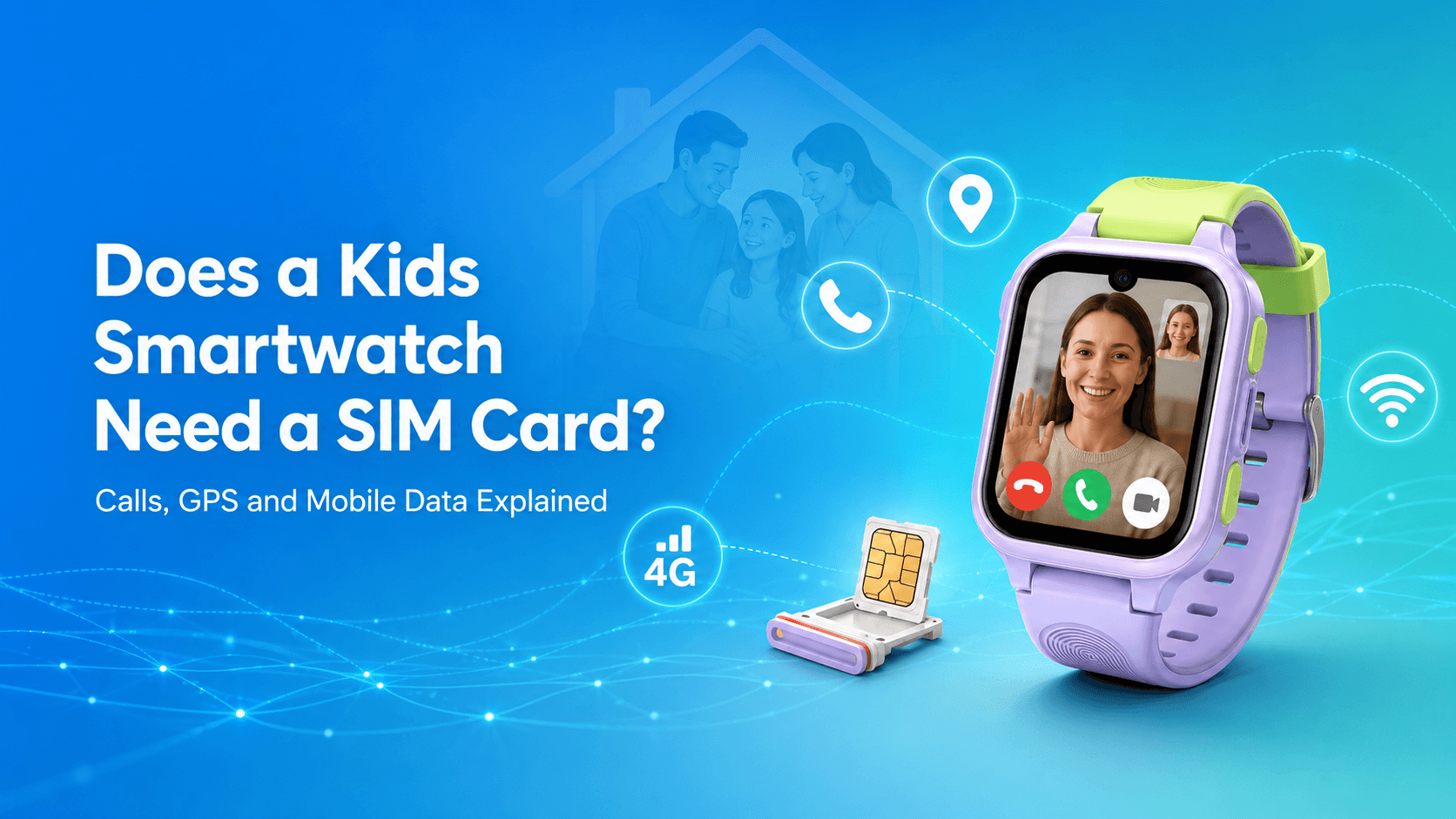
In many cases, yes. A 4G kids smart watch usually needs a SIM card, eSIM, or mobile service plan to support calling, connected location features, and communication.
Will a kids smart watch distract my child at school?
It depends on the device and settings. A kids smart watch with school mode can help reduce distractions during class by limiting certain features at scheduled times.
What age is right for a kids smart watch?
There is no single perfect age. Many parents consider a kids smart watch when their child starts school, walks short distances, joins activities, or spends more time away from direct supervision.
Is a kids smart watch safer than giving a child a phone?
For many younger children, yes. A kids smart watch can offer calling, location, and SOS features without giving full access to apps, social media, and the open internet.
Do kids smart watches track steps too?
Many kids smart watches include basic activity features such as step counting. However, their main value is usually communication, GPS location, emergency support, and parental controls.
Conclusion
A kids fitness tracker and a kids smart watch may look similar, but they solve different problems.
A kids fitness tracker is best for movement, step goals, and simple healthy habits.
A 4G kids smart watch is best for families who need calling, GPS location, SOS, school mode, and a safer alternative to a smartphone.
For some children, a basic kids activity tracker is enough. For others, especially those starting to walk to school, attend activities, or spend more time away from parents, a kids smart watch gives families more practical support.
In the end, the right choice depends on your child’s real day.
Not the product photo.
Not the longest feature list.
Not the most expensive option.
Just this simple question:
Do you only want to track activity, or do you also want to stay connected?

Share:
LAGENIO K9 VS K10: Which Kids Smart Watch Should You Buy
Why Does Your Child Need a Watch with GPS?