

For many families, biking to school sounds appealing. It gets children outside, adds movement to the morning and gives them a more active role in a journey they make almost every day.
But there is often a big step between riding to school with a parent and riding to school independently.
A bike bus offers another option in between. Children and adults ride to school together along a planned route, with more families joining at agreed points along the way.
The idea has become increasingly visible in school communities. In September 2026, WBEZ reported that around 30 bike buses were operating in the Chicago area, while one recent ride to Waters Elementary grew to around 100 cyclists by the time it reached school.
For families, though, the interesting part is not how large a bike bus can become. It is how an everyday school journey can become an opportunity for movement, community and gradually increasing independence.
What Is a Bike Bus?
A bike bus is a group of children and adults who bike to school together along an agreed route.
Think of it a little like a school bus on bicycles. Instead of waiting for a vehicle, families meet at a starting point or join the group at designated places along the way.
Some bike buses are large and highly organized. Others are simply a few neighboring families riding together once a week.
Portland's Safe Routes to School program describes a bike bus as a way for students to bike to and from school with adult volunteers. Groups may use planned routes, meeting times and joining points, but a bike bus does not have to be large or complicated.
The basic idea is simple: families make the school journey together instead of making it separately.
Why Are More Families Joining Bike Buses?
Bike buses are not new, but they have become more visible in school communities.
In Portland, for example, the city is supporting bike bus routes at nine elementary schools through a wayfinding pilot that uses signs and pavement markings to make routes more visible.
Part of the appeal is practical. The school journey already has to happen every weekday, and a bike bus can turn that journey into an opportunity for physical activity rather than requiring families to find extra time for it later.
There is a social side too. Children can travel with classmates and neighbors, while parents and caregivers become part of a shared school routine.
And for families thinking about independence, a bike bus can fill an important gap. A child may be ready to take more responsibility for getting to school before a parent is comfortable with them making the entire journey alone.
That is what makes the idea particularly interesting: transportation, movement, community and growing independence can all become part of the same everyday journey.
A Middle Step Toward Independence
Childhood independence rarely happens in one big jump.
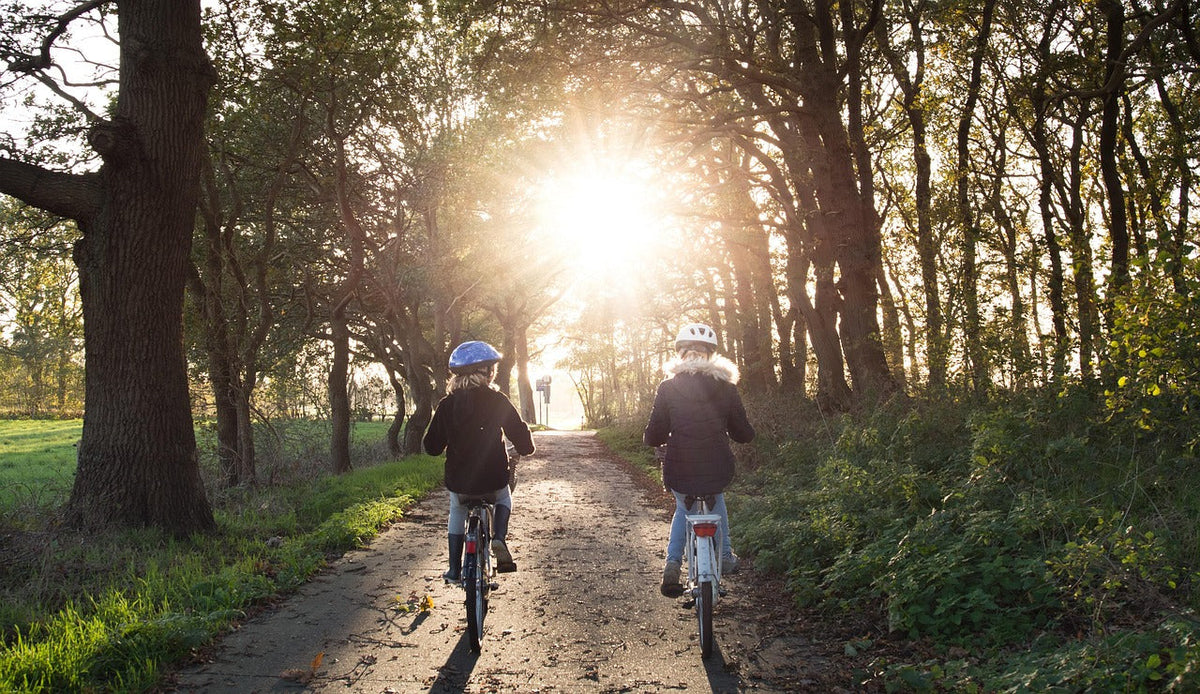
A school journey might gradually change from riding beside a parent, to taking the lead while a parent follows, to joining a bike bus, riding with a sibling or friend, and eventually managing more of the journey independently.
Not every child will follow that sequence, and a bike bus does not have to lead to riding alone.
What it can provide is practice.
Children still have adults around them, but they are controlling their own bikes, keeping pace with a group, recognizing familiar streets and learning the routine of getting themselves to school.
Over time, they may begin remembering when they need to leave, where the group meets and what they need before setting off. These are small responsibilities, but repeating them gives children opportunities to manage more for themselves.
Is a Bike Bus Right for Your Child?
Being part of a group adds adult support, but children still need enough riding experience to participate comfortably.
They should already be able to control their bike, brake predictably and follow instructions. Safe Routes to School guidance also recommends that children have some practice riding in the street before joining, noting that a bike bus is not the best place to learn how to ride for the first time.
It is also worth considering how your child behaves around friends. Riding with classmates can be more exciting than riding quietly with a parent, so listening, staying with the group and riding predictably all matter.
If you are still deciding whether your child has the riding skills, traffic awareness and judgment needed for the school journey itself, read our guide: Is Your Child Ready to Bike to School?
What Makes a Bike Bus Work?
A bike bus is more than a group of children who happen to be cycling in the same direction. It needs a simple, predictable plan.
That starts with the route. The shortest way to school is not always the best route for a group. Organizers may need to consider traffic, crossings, visibility, available cycling infrastructure and places where additional families can comfortably join.
Safe Routes to School guidance recommends testing a proposed route with adults before the first group ride and creating a simple map showing where and when families meet.
Adult support matters too. Depending on the size of the group, adults may ride at different positions to help children stay together and follow the agreed routine.
Consistency can matter more than size. Children and parents should know where the group meets, when it leaves and what happens if a normal ride changes.
How to Find or Start a Bike Bus
If the idea sounds useful for your family, first check whether something similar already exists at your child's school.
Ask the school, PTA or parent group whether families already ride together. A local Safe Routes to School program or cycling organization may also know about existing groups. Keep in mind that not every community uses the name “bike bus”; you may also hear terms such as “bike train” or “cycle train.”
If there is no existing group, you can start small. Portland's Safe Routes to School notes that a bike bus can be as simple as two families taking turns riding students to school.
- Talk to a few nearby families. Find out who is genuinely interested in riding together.
- Choose and test a route. Adults should ride it first, ideally at roughly the same time children would travel to school.
- Set a simple schedule. Decide which day you will ride, when the group leaves and where families can join.
- Agree on adult support. Make sure the group has enough adults for the number and experience of the children taking part.
- Keep it consistent. One reliable ride each week can be a better starting point than trying to organize a daily bike bus immediately.
If more families become interested, the route, meeting points and volunteer group can grow over time.
Let Kids Take More Responsibility Over Time
Adults may organize the bike bus, but children do not have to remain passive participants in the routine.
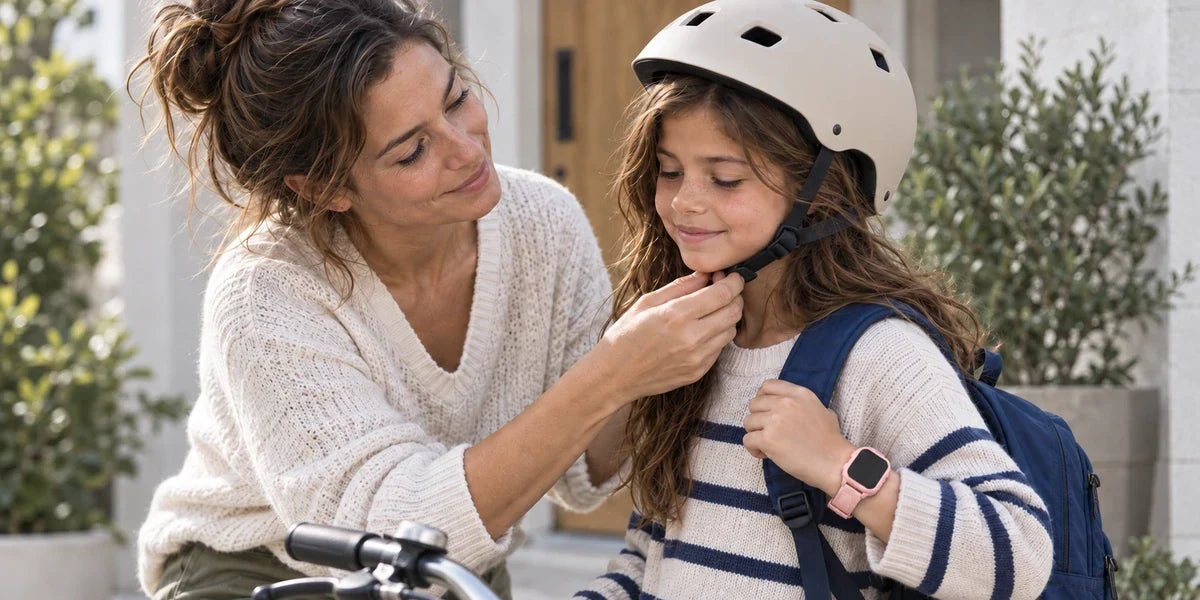
Once the journey becomes familiar, give them small parts of it to manage. Can they remember what time they need to be ready? Can they check that they have their helmet and school things? Do they know where the group meets?
The goal is not to turn the morning into another test. It is to let children gradually take ownership of a journey that was once managed almost entirely by adults.
That may be one of the most useful things about a bike bus. The destination stays the same, but the child's role in getting there can slowly change.
Make a Plan for When Things Change
Even a familiar school routine occasionally changes.
Your child might miss the group. A ride could be cancelled because of weather. An after-school plan might change, or your child might be getting home differently that afternoon.
Decide beforehand what your child should do in those situations and when they should contact you. They do not need to check in constantly during a normal ride, and anything that could distract them while cycling should wait until they have stopped in an appropriate place.
As children begin taking more responsibility for their school journey, some families also choose a simple way to stay in touch if the normal plan changes.
A kids smartwatch can be one option. LAGENIO kids smartwatches offer features such as 4G Voice Call, GPS location features, SOS and parent-approved contacts, while avoiding social media, an open browser and third-party apps.
Technology should remain a backup to the family plan. A watch cannot organize the bike bus, choose an appropriate route or make riding decisions for a child. Those still depend on preparation, practice and the people involved.
Frequently Asked Questions
What is a bike bus?
A bike bus is an organized group of children and adults who cycle to school together along a planned route. Families may start together or join at agreed meeting points along the way.
Does a child need to be able to ride independently to join a bike bus?
Not necessarily. Adults are typically part of the group, so a child does not need to be ready for an entirely independent school commute. They should, however, already have enough bike control and experience to ride comfortably with the group.
How many families do you need to start a bike bus?
There is no universal minimum. A bike bus can start with only a few families and grow over time. A workable route, enough adult support and a consistent plan matter more than having a large group.
How do I find a bike bus near me?
Start with your child's school, PTA or parent group. You can also check whether your city has a Safe Routes to School program or a local cycling organization that supports school travel. It can help to search for “bike train” or “cycle train” as well, since communities may use different names.
Is a bike bus the same as a bike train?
The terms are often used for similar organized group rides to school. The name varies between schools and communities, but the basic idea is usually the same: children travel together by bike with adult support.
Growing Independence, One Ride at a Time
A bike bus does not have to be a stepping stone to riding alone.
For some children, it may simply remain a fun way to get to school with friends. For others, it may become one stage in a longer process of taking more responsibility for familiar journeys.
Either way, children are doing more than simply getting from home to school. They are learning the route, taking part in the routine and becoming more involved in how they move through their everyday world.
Independence does not have to arrive all at once. Sometimes, it grows one ride at a time.
Share:
Is Your Child Ready to Bike to School? A Parent’s Guide