
Updated September 2026

Parents often want a number. One hour of social media a day? Two? Three?
The question has come back into focus after Meta introduced new protections for teenage users of Facebook and Instagram in August 2026. One of the biggest changes is a default two-hour daily limit across the two apps.
But parents should not treat two hours as a target.
There is no universal daily social media limit that is right for every child. A more useful sign that social media is becoming too much is when it starts taking time and attention away from sleep, schoolwork, exercise, family time or offline activities.
That is also where current guidance on children's digital media is heading: away from watching the clock alone and toward looking at how technology fits into the rest of a child's life.
What Meta's New Two-Hour Limit Actually Means
Under an agreement announced in August 2026, Meta introduced new protections for users under 18 on Facebook and Instagram. The changes put more emphasis on time limits, nighttime use, school-hour interruptions and parental control.
According to Meta's official announcement, the protections include:
- A default two-hour daily limit across Facebook and Instagram
- Parental permission required to turn off that limit
- A default nighttime block between midnight and 6 a.m.
- Most push notifications muted during school hours
- Prompts after every 15 minutes of continuous use
- Additional reminders when daily use reaches 60 and 90 minutes
- More parental supervision controls
The two-hour limit is cumulative, so time spent on both Facebook and Instagram counts toward the same daily total.
These changes are significant, but they do not mean two hours has suddenly become the recommended amount of social media for every teenager.
Two hours is a boundary set by the platform, not a universal health guideline.
The more important signal is that major platforms are beginning to build stronger limits into the experience rather than leaving every decision to young users.
When Does Social Media Become "Too Much"?
The American Academy of Pediatrics updated its approach to children's digital media in 2026 with a broader message: families should look beyond screen time alone.
Its latest guidance looks at the wider digital environment, including what children are doing online, when they are doing it and what digital media may be pushing out of their day. You can read more in the AAP's 2026 guidance on moving beyond screen time.
That distinction matters.
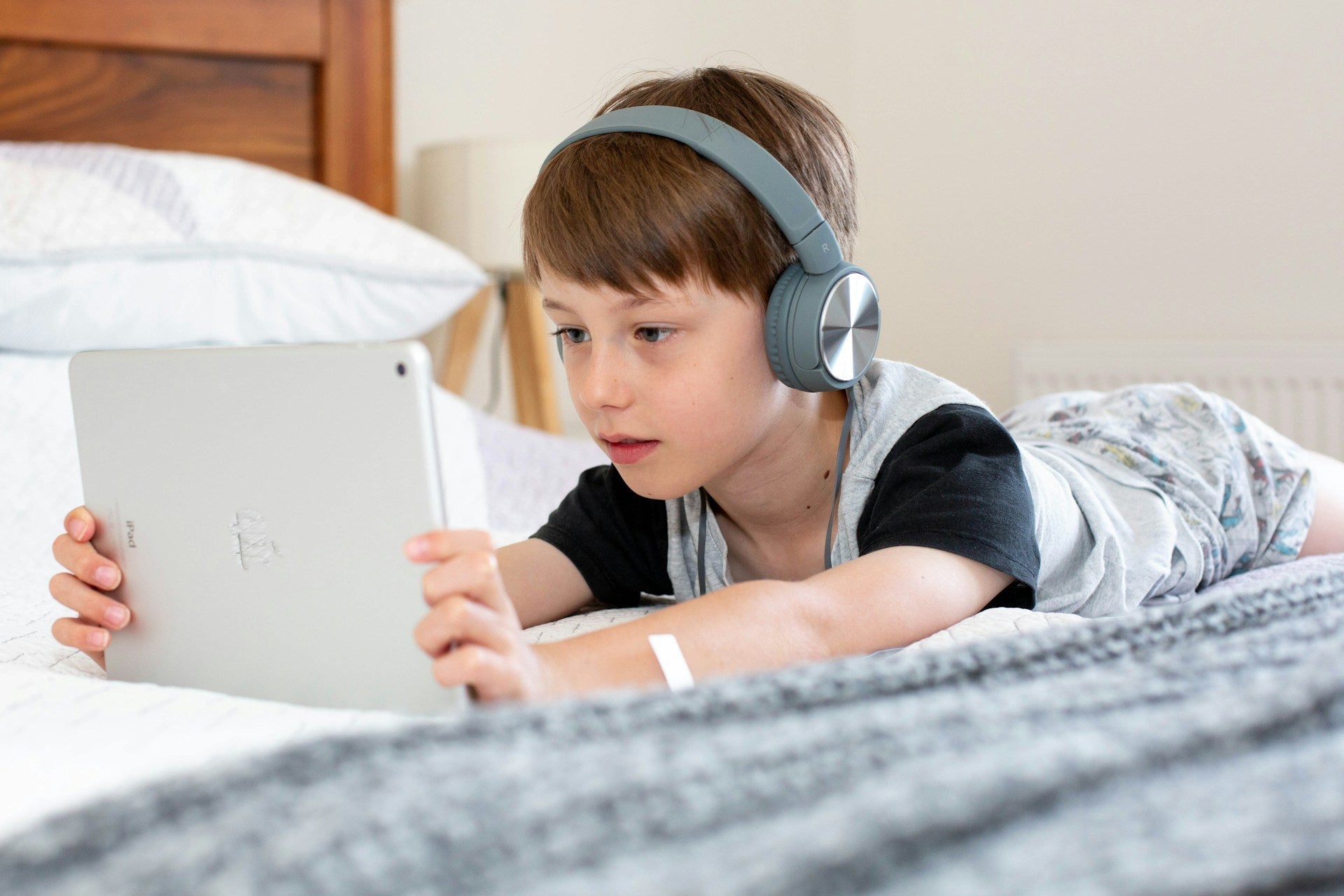
A teenager spending an hour chatting with friends is not necessarily having the same experience as someone spending an hour endlessly scrolling through short videos.
The time of day matters too.
Thirty minutes on social media after homework is different from 30 minutes that delays bedtime. A notification after school is different from one arriving in the middle of a lesson.
Instead of asking only, "How many hours has my child been online?", look at what is being crowded out.
- Is social media regularly pushing bedtime later?
- Is it interrupting homework or concentration?
- Does your child struggle to put the phone away during meals or family time?
- Are online activities replacing exercise, hobbies or time with friends in person?
Those signs often tell parents more than whether a screen-time report is a few minutes above or below a fixed number.
Too much is not only about the clock. It is about what social media starts replacing.
When Children Use Social Media Matters Too
Meta's new rules highlight another useful point: timing matters.
The protections include nighttime restrictions and a School Mode that mutes most notifications during school hours. A child does not need the same level of access at every moment of the day.
Families can take a similar approach at home without constantly counting every minute.
Clear boundaries around certain parts of the day are often easier for children to understand and easier for parents to maintain. That might mean no social media during homework, no phones at the dinner table or keeping devices out of the bedroom at night.
The goal is not simply to reduce a number on a screen-time report. It is to protect the parts of the day that matter more.
If you are also thinking about connected devices during the school day, see our guide: Are Kids Smartwatches Allowed in Phone-Free Schools?
For Younger Children, Ask a Different Question
For younger children, the first question may not be:
"How much social media should they use?"
It may be:
"Do they need social media yet?"
Children can have real reasons to need technology. A parent may want a child to call after school, stay reachable during an activity, share their location on the way home or have an easy way to ask for help.
None of those needs automatically requires Instagram, TikTok or another social media account.
Connected does not have to mean social.
A child can have access to family communication, GPS location and SOS features without also having open social feeds, unrestricted apps and web browsing.
We explored this distinction in more detail in our guide to kids and social media apps before the first smartphone.
A Kids Smartwatch Can Be One Step Before a Smartphone
For some families, delaying social media does not mean giving a child no way to stay connected.
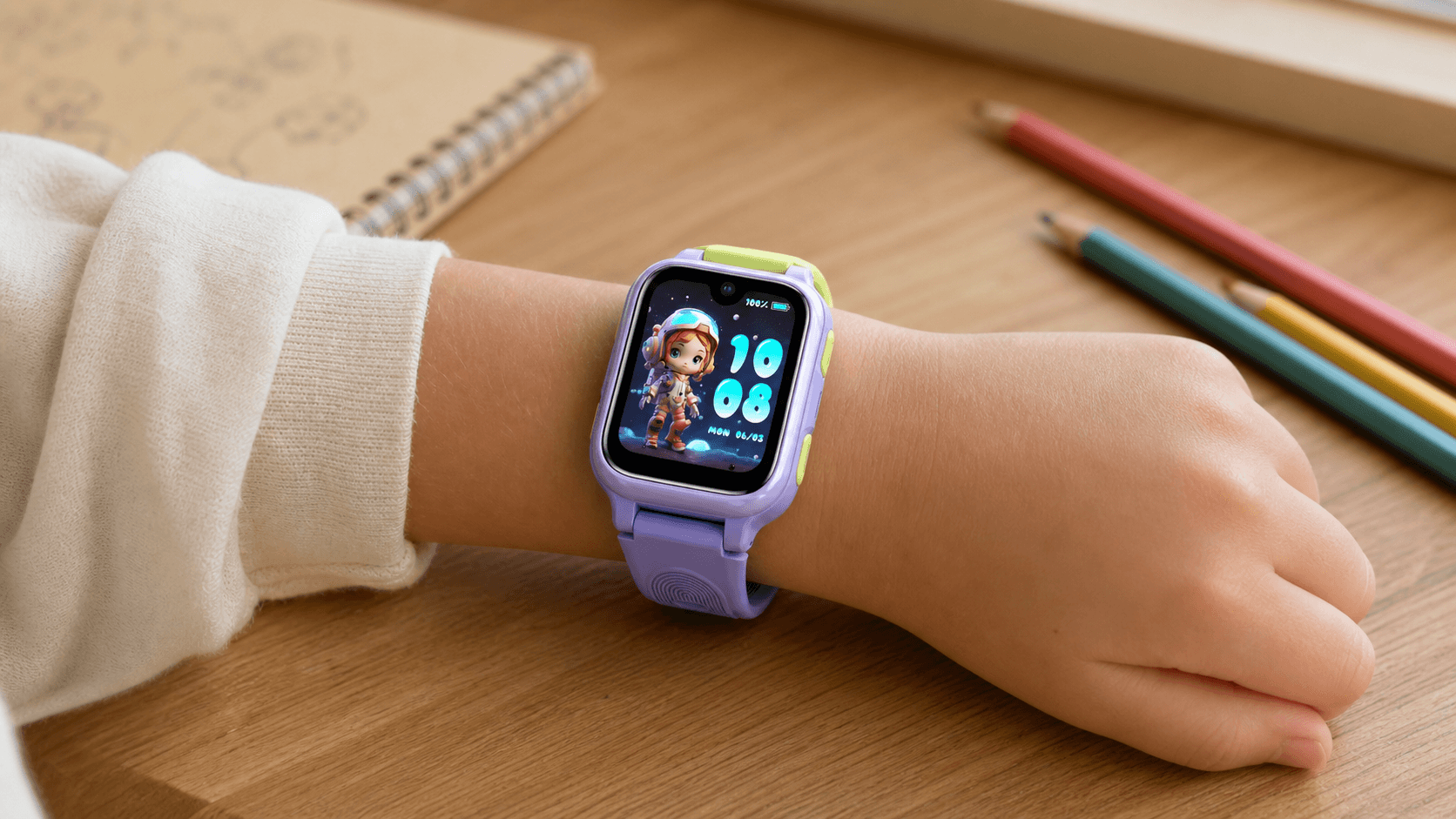
A kids smartwatch can offer a smaller set of tools: calling family, checking location, using SOS and giving parents more control over how the device is used.
That is the approach behind LAGENIO kids smartwatches. They focus on family communication and safety features without open social media, an unrestricted app store or an open web browser.
Parents can also manage important parts of the experience through the companion app. Our guide to kids smartwatches with parental controls explains how features such as approved contacts, location tools and Class Mode can help families set clearer digital boundaries.
The point is not that every child needs a smartwatch. It is that parents have more than two choices.
It does not have to be no device at all or a smartphone with everything on it.
There are steps in between.
Don't Treat Two Hours as the Goal
Meta's new two-hour limit is useful because it puts a clear boundary where there was previously much more freedom.
But parents should not look at two hours and think, "If my child stays under that number, everything is fine."
Look at the bigger picture.
If social media is regularly pushing aside sleep, schoolwork, exercise, family time or offline friendships, the problem is not solved simply because usage stays below two hours.
For younger children, there is one more question worth asking before setting a social media timer:
Do they need access to social media in the first place?
Sometimes the goal is not to find the perfect amount of social media. It is to give children the communication and safety tools they need without opening every part of the digital world at once.

Share:
Are Kids Smartwatches Allowed in Phone-Free Schools? What Parents Should Know in 2026